Date night at home ideas that aren't dinner and a show
Short answer
The difference between a date and an evening in is attention: a date has the two of you as its subject. Swap consuming something side by side for doing something facing each other: twenty questions by candlelight, a slow dance in the kitchen, giving each other ten unhurried minutes of touch. Structure, not novelty, is what makes it feel like a date.
One to try tonight
The Mystery Ritual is a free guided practice from the library. The player keeps the time and gives you one phase at a time, so you can practise instead of reading. No account needed.
Why dinner and a show stopped working
Dinner and a series is a fine evening. It is also exactly what the two of you do on a random Thursday, which is why calling it date night changes nothing: the content is consumption, and the attention points at the screen or the plate, side by side, facing the same direction, at the same things as always.
A date, structurally, is an evening whose subject is the two of you. That requires facing each other, at least some of the time, and it requires the mild, productive discomfort of nowhere else to look. Everything below is built on that one swap.
Five evenings that face each other
Each of these is a complete date. Pick one, give it a real opening, phones away, light changed, and a real end.
- The question game. Twenty questions you have never asked each other, written separately beforehand, drawn from a bowl by candlelight. Rule: no question about logistics, money, or the kids. First one to say I never knew that pours the wine.
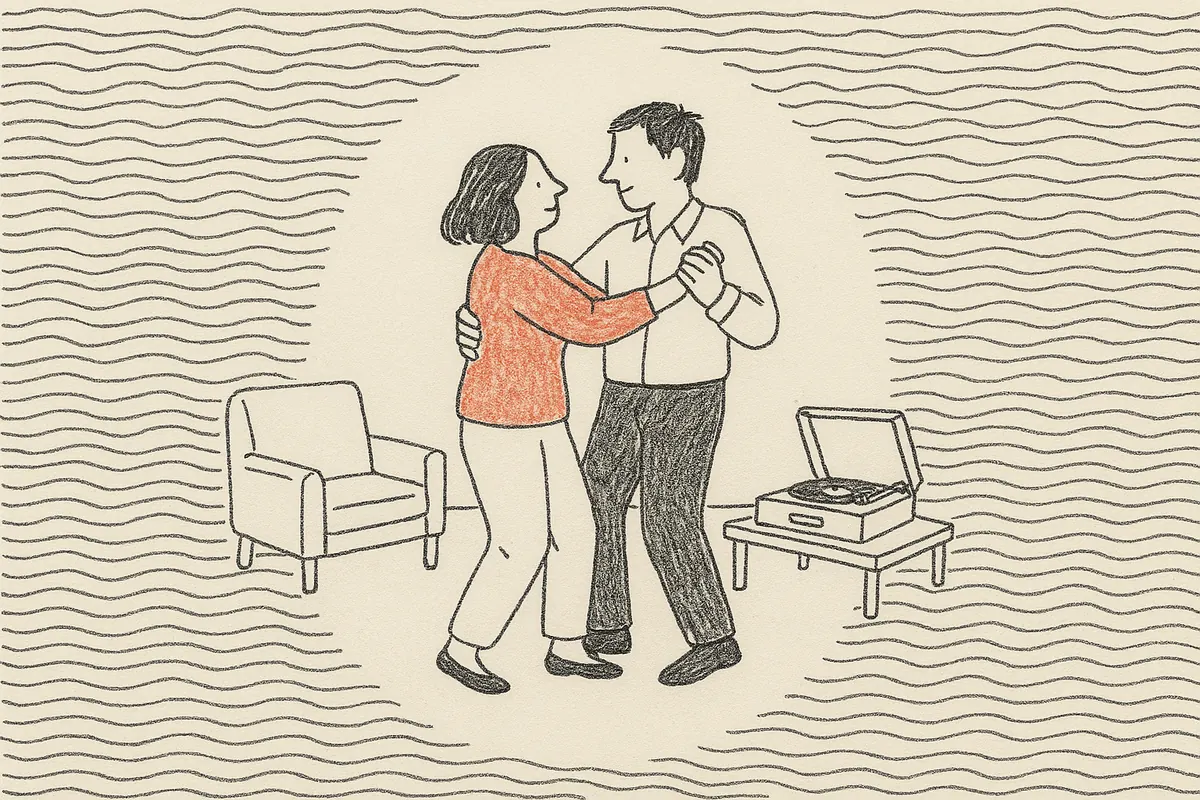
- The kitchen dance. One song each, chosen secretly, played loud. Slow dance to both, no skill required, full contact. Two songs is ten minutes and lands deeper than most whole evenings.
- Ten minutes each of touch. One gives, one receives, then swap: shoulders, hands, scalp, feet, unhurried and unreciprocated while it is your turn. Receiving without owing anything back is rarer than it should be, and it is the whole point.
- The gallery of the year. Each of you picks five photos from your phone from the last year that the other has never really looked at. Show them one at a time and tell the story behind each. The phones go away again after.
- The blind tasting. One of you assembles five small things to taste, the other keeps their eyes closed and guesses, then swap. Silly on paper, and it reliably produces the particular laughter of two people paying complete attention to each other.
The shape matters more than the idea
Any of these can fall flat if it just starts, gets interrupted, and trails off. What makes an evening at home feel like a date is edges: a deliberate opening that marks the shift out of the household evening, no phones inside the container, and a closing with some intention in it, a toast, a long kiss, the candle out.
Keep it to an hour or less. An evening with a firm edge stays wanted. The goal is not to fill the night. It is to have both of you slightly wishing it had been longer.
Common questions
My partner will find this stuff cheesy. Which one is safest?
The gallery of the year, because it starts from something already in hand and feels like conversation rather than an exercise. The kitchen dance is the best second: nobody can call two songs a program. Save the touch exchange for when the habit of facing each other has warmed up.
How often should we do a real date night at home?
Weekly is the honest target, and a fixed slot beats a good intention. Even twice a month, held reliably, changes the texture of the weeks between. Frequency with small evenings beats occasional grand ones.
Can the evening end in sex?
It can, and it goes better unplanned. Say beforehand that nothing is owed at the end of the hour. Evenings of real attention lead there more often than dinner and a show ever did, precisely because nobody was steering.