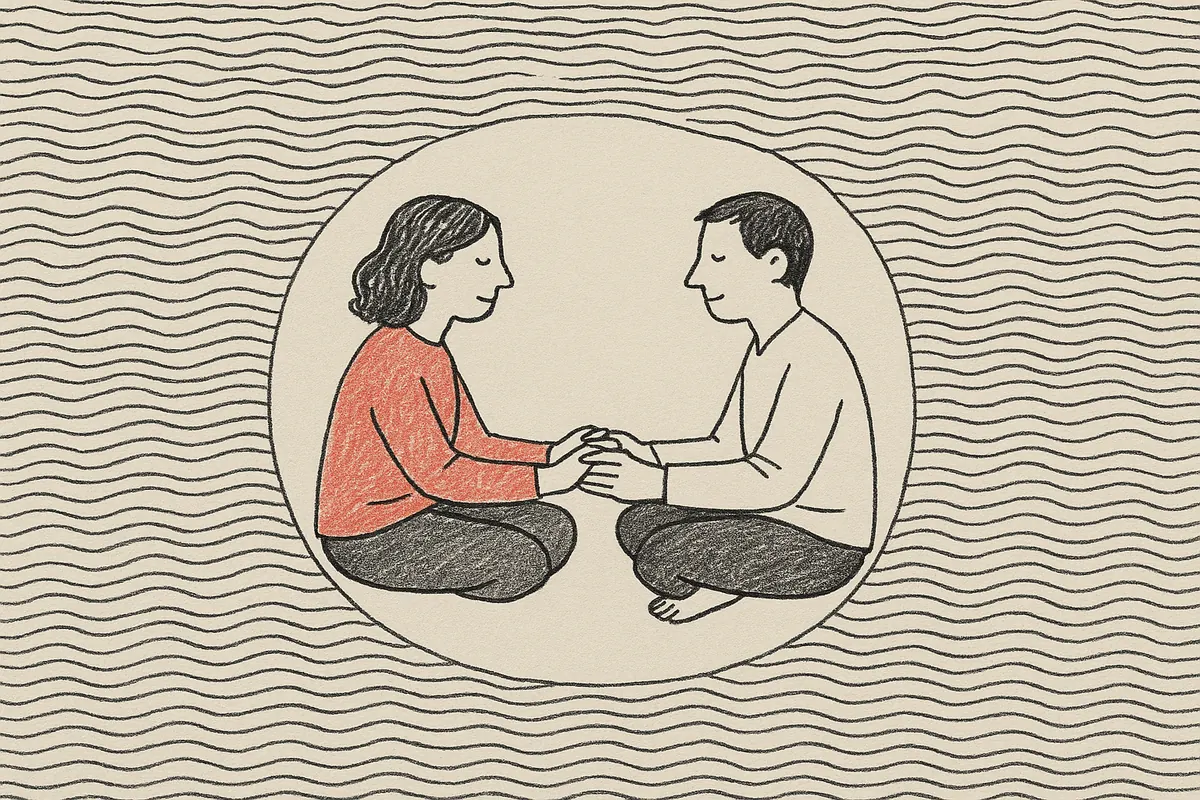
Tantric-inspired practices for beginners, as a couple
Short answer
Start with the practical core, no robes required: breathing in the same rhythm for five minutes, soft eye contact for five more, a seated full body embrace held in stillness, and unhurried touch with attention on sensation instead of destination. Twenty minutes total. Everything deeper in tantric-inspired practice grows out of these four seeds.
One to try tonight
Yab-Yum Stillness is a free guided practice from the library. The player keeps the time and gives you one phase at a time, so you can practise instead of reading. No account needed.
An honest starting point
Tantra is an old and varied family of traditions, and most of what circulates under the name today is a modern, Western, sexuality centered adaptation of it. Liminal's practices are tantric-inspired: they borrow the practical instruments, breath, gaze, stillness, slowness, attention, without claiming the lineage or promising transcendence on a schedule.
The honest pitch is more modest and more believable: these are attention practices for two bodies. Done regularly, they tend to make physical intimacy slower, closer, and more vivid, and they give a couple a shared language of pace and presence that most couples never build. That is plenty.
The four seeds, in one evening
Twenty minutes, low light, sitting comfortably, phones elsewhere. In order:
- Shared breath, five minutes. Sit close, close your eyes, and let your breathing gradually find the same rhythm. No counting, no technique. One shared tempo is the foundation everything else stands on.
- Soft gaze, five minutes. Open your eyes and rest them on each other's, soft focus, blinking freely. Laughter will arrive; let it pass through. What remains afterward is an unusual, slightly startling degree of being seen.
- Stillness together, five minutes. One of you sits between the other's legs, back against chest, arms wrapped around, or any full contact position you can hold restfully. Then nothing: two bodies breathing, held still. Notice how much happens in it.
- Slow attention, five minutes. Unhurried touch, hands and arms and face, at half speed, with both of you attending to sensation rather than heading anywhere. This is the doorway the deeper practices walk through.
Close deliberately: one breath together, one sentence each about what you noticed. Deliberate endings are themselves part of the practice.
Where it goes from here
With the seeds familiar, the practices deepen along natural lines: the stillness extends into longer held embraces where arousal is allowed to be present without being acted on, the slow attention extends into slow sex, and the shared breath runs underneath all of it. The guided couple practices in the library, eye gazing, held stillness, slow sex, shared energy circulation, are built as structured versions of exactly this arc.
Go at the pace of the slower partner, always. In these practices, the slower pace is not the compromise. It is the advanced setting.
What to expect, honestly
Early sessions are usually some mix of awkward, funny, and unexpectedly moving. Eye contact in particular can bring up more feeling than anticipated; let it, nothing needs to be done about it. What you should not expect is fireworks on demand: the changes are cumulative, showing up over weeks as a different quality of pace and contact in ordinary intimacy.
And if a practice ever feels wrong rather than merely new, stop, say so, and choose a smaller container next time. Consent and comfort are not the beginner restrictions. They are the ground the whole thing stands on.
Common questions
Do we need any experience with meditation or yoga?
No. Every instrument involved, breathing, sitting, looking, touching slowly, is something you already do. The only new element is doing them deliberately, together, with attention. Experience with any stillness practice shortens the awkward phase but is not required.
Is this religious or spiritual? We are not.
The practices here are borrowed instruments, used for attention and connection, and they work with no belief attached. If spiritual meaning arrives for you inside them, it is yours. None is required at the door.
How is this different from just cuddling and eye contact?
Materially, it is cuddling and eye contact, plus three things: deliberate structure, agreed duration, and sustained attention. The same difference as between humming and singing. The materials are ordinary. The container is what changes what they do.